Building student skills. Supporting their success.

Mastermind Cognitive Training helps colleges and universities strengthen the executive function and cognitive skills behind independent study: attention, working memory, and processing speed. Assessment shows where students stand, self-guided training builds those skills, and reassessment documents growth. Student success, accessibility, and student-athlete academic services teams get measurable progress without adding staff hours.

In a registered clinical trial at the University of Bedfordshire, UK primary students who trained on Mastermind showed significant improvement in attention and in the eye-movement control that steadies reading, holding a line of text and finding the next one.

ISRCTN75915439 · N=168 · See the trial's findings

  • 6.9×

    Working memory growth

    Greater improvement than a control group over 10 to 18 weeks

  • 4.7×

    Visual attention and tracking growth

    Greater improvement than a control group over 10 to 18 weeks

From a Mastermind study, published as a JMIR preprint.

A profile for each student, and a starting point for your team.

A Mastermind Learning Readiness Profile reads a student's underlying skills, separates the strong from those that need building, and points to where to begin rather than only what a score would say.

  • One self-guided session of about 30 minutes, with no specialist time to book.

  • Re-run each term, so growth is documented rather than described.

  • The same measures every time, so a cohort or a caseload compares.

See a sample Learning Readiness Profile

Mastermind Learning Readiness Profile

Learning is most accessible for this student when work has a clear first step and a quick reset when it feels hard, before frustration builds or attention drifts.

Sample A · First-year · Baseline

Support first

Focus & AttentionStarts work and stays with it Emerging
PacingKeeps pace across multi-step work Developing
Response InhibitionPauses to check before answering Developing
Working MemoryHolds directions while working Developing

Build from

Processing SpeedTakes work in at a steady pace Age-typical
Object TrackingFollows information on the page Age-typical
Sample reportAn instructional tool, not a medical diagnosis.
One system assesses, trains and measures

What a campus usually funds three times, Mastermind covers once.

Staff capacity

Student success is the mission. Mastermind gives your team a way to identify, support, and measure it without adding to workload, and it protects the hours advisors and specialists spend with students.

Budget

Consolidation is the other half of the case. Cognitive assessment, targeted training, and progress measurement usually sit across separate tools, intervention software, and contracted specialist time.

Work one system covers
Typically a separate line item Mastermind
Cognitive assessment A separate assessment tool Included
Targeted training Separate intervention software Included
Progress measurement Contracted specialist time Included

Mastermind helped me improve on the tennis court and in the classroom.

Vojtech Vales Freshman & Varsity Tennis Player · University of Pennsylvania

Student Success & Retention

An early, objective baseline that guides support from day one

Retention starts with knowing where students stand. Mastermind gives student success teams an objective baseline on each student's underlying skills in the first weeks, then a structured way to strengthen them.

See a sample Learning Readiness Profile
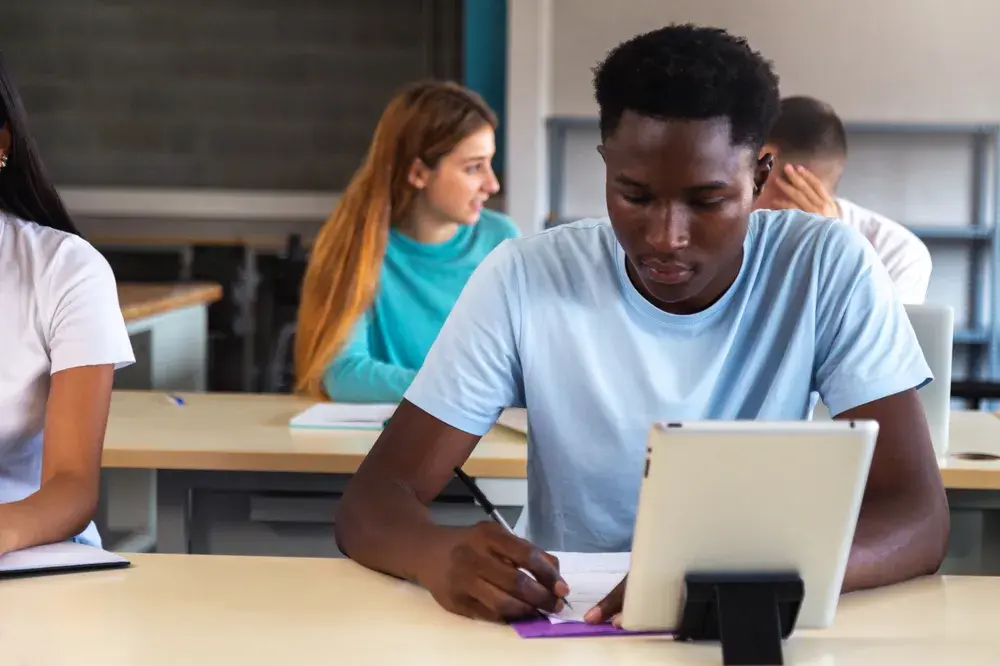
A college student takes notes by hand while working from a tablet at a classroom desk, with classmates seated behind.

From baseline to growth

Reassessment over the term turns that baseline into documented growth, so an advising team can reach students in time to build the skills.

Accessibility & Disability Services

A strengths-based read that complements your accommodations

For students who learn differently, the Learning Readiness Profile gives your team an objective, strengths-based read on the skills behind their work, in the same terms for every student. It informs support planning and gives each student something concrete to build, alongside the accommodations and documentation your office already manages.

See a sample Learning Readiness Profile

The Learning Readiness Profile is an instructional tool, not a medical or psychological diagnosis, and does not replace clinical evaluation.

A college student uses a tablet at a library table with an open book and a laptop, bookshelves behind her.

Something to build on

Beyond accommodations, each student gets a plain-language read of their skills and a structured way to strengthen them.

Student-Athlete Academic Services

A steady focus that holds up under a demanding schedule

Student-athletes carry a full academic load on top of training and travel. Mastermind builds the attention, working memory, and processing speed that independent study depends on. Academic services staff get the same progress data the rest of campus runs on, for the same program.

See a sample Learning Readiness Profile
A tennis player reaches for a shot on a blue court, seen from above.

Fits around practice

Self-guided sessions athletes run on their own time, so the program fits around a full training schedule.

See a sample Learning Readiness Profile

The sample is a real Mastermind Learning Readiness Profile, the same one your team receives for each student who takes the baseline. Share your details and someone from our team will follow up with it.

What's in the profile

  • Each underlying skill scored and placed on a band, from Emerging to Age-typical.
  • Skills ranked by how much they influence the others, so the top of the list is where support carries furthest.
  • A one-sentence read on the conditions under which each student learns best.
  • A "Start here" list of adjustments to try first, such as naming the first step of a task or building in a check-in before focus drifts.
  • The profile comes out of one baseline session, and the training that follows targets exactly what it surfaced, with no specialist hours to schedule for either.

College, university, or department.

We use your details to send the sample and to follow up about Mastermind, nothing else. Read our Privacy Policy.

Independently studied

Across 168 students in UK primary schools, Mastermind produced significant improvement in teacher-reported attention (p=.017) and in eye-tracking measures of visual control (p=.001).

Led by Dr. Anastasia Giannakopoulou, lead researcher on the trial, with Dr. Joaquin Anguera, a UCSF cognitive neuroscientist and leading researcher in game-based cognitive training.

Read the Research
Preprint

Virtual Reality and Tablet Cognitive Training Improve Attention and Academic Skills Without Dose Effects

Giannakopoulou A, Gordon AM, Gallen CE, Seaman M, Fedele D, Anguera JA

doi: 10.1101/2025.09.16.676629 ISRCTN75915439 · N=168 · Ages 8–10 University of Bedfordshire · UCSF Neuroscape

Also peer-reviewed

A separate study, published in JMIR Formative Research, found junior tennis players using Mastermind improved their Universal Tennis Rating 38% more than a control group (p=0.008). It measured on-court performance in junior athletes, not academic outcomes.

Frequently asked questions

The questions institutional buyers ask first. For pricing and rollout details, a member of our team can walk you through it.

Schedule a Demo
  • Is Mastermind backed by research?

    Yes. A registered clinical trial in UK primary schools found significant improvement in teacher-reported attention and in eye-tracking measures, and a separate peer-reviewed study of junior athletes found significant improvement in competitive performance. There is no higher-education study yet, and neither is presented as a higher-ed result.

  • How does Mastermind help colleges support students with executive function challenges?

    Mastermind gives your team an objective read on each student's executive function and related skills, attention, working memory, and processing speed, then builds those skills through self-guided training and documents the growth through reassessment. The result is a clear, measurable picture of where each student is and how they are progressing.

  • Is the Learning Readiness Profile a diagnosis?

    No. The Learning Readiness Profile is an instructional tool that describes learning-relevant skills to inform support. It is not a medical or psychological diagnosis and does not replace clinical evaluation.

  • How does Mastermind fit alongside student success and accessibility services?

    It complements them. The Learning Readiness Profile gives your team an objective, strengths-based read to inform planning, and the training runs on its own, so staff time goes toward interpreting results and working with students rather than administering an assessment.

  • How much staff time does it take to run?

    Very little. Assessment and training are self-guided and auto-leveling, so they run with little ongoing facilitation from your staff.

  • What devices does Mastermind run on?

    Mastermind runs on tablets, on iOS and Android phones, and on Meta Quest VR headsets, so device choice can follow what students already have.

Let’s start the conversation

Schedule a demo to see how Mastermind fits your campus.